
Saffron can cost up to $10,000 per pound. It comes from the flower Crocus sativus, a small purple bloom that appears for only a short window each year. The part used as a spice is the stigma, the thin red strands at the center of the flower.
Each flower produces just three of these stigmas, and there’s no backup supply or extra usable parts for cooking. The rest of the flower, including its petals and stamens, might have uses in dyes or other applications, but the culinary value is entirely in those three threads. Once picked, the stigmas are dried to create the saffron found in kitchens. The tiny yield is the first reason the spice costs so much.
Scale That Feels Unreal
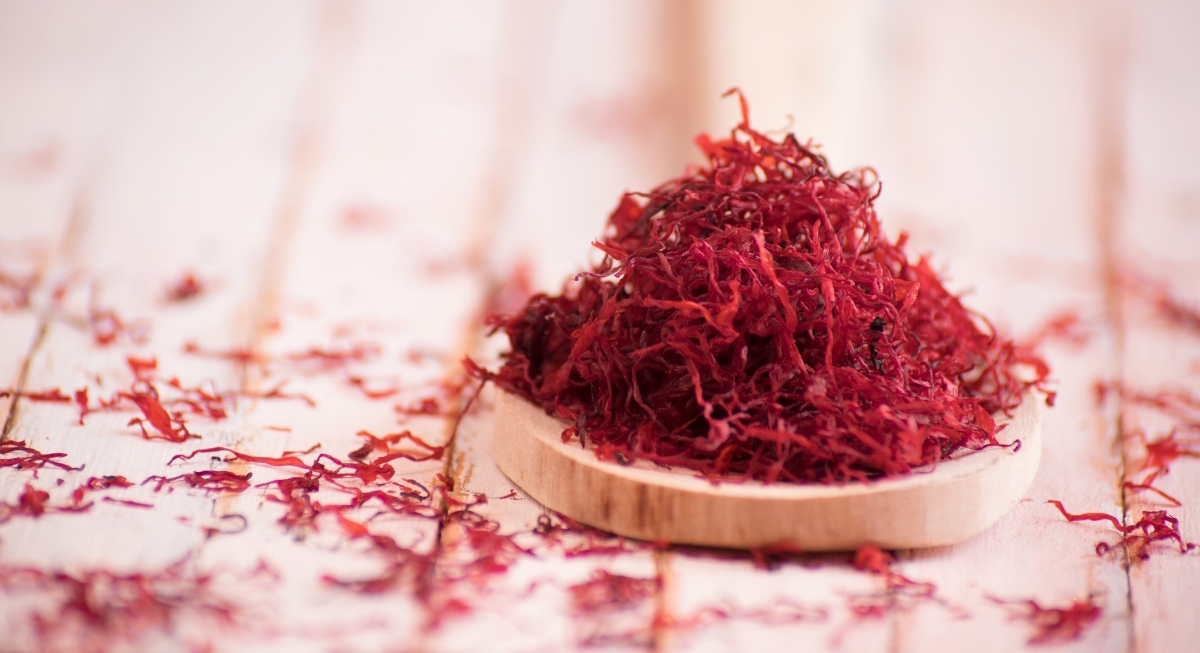
Image via Getty Images/Ibrahim Hamroush
The numbers behind saffron production explain why those threads are treated like gold. It takes about 70,000 to 75,000 flowers to produce just one pound, or 0.45 kilograms, of saffron. Each stigma weighs roughly 2 milligrams, which means even a large harvest adds up slowly.
Looking at it another way, producing 1 kilogram (2.2 pounds) can require around 150,000 flowers and between 370 and 470 hours of labor. This level of effort goes into something that can fit into a small container.
A Process That Cannot Be Rushed
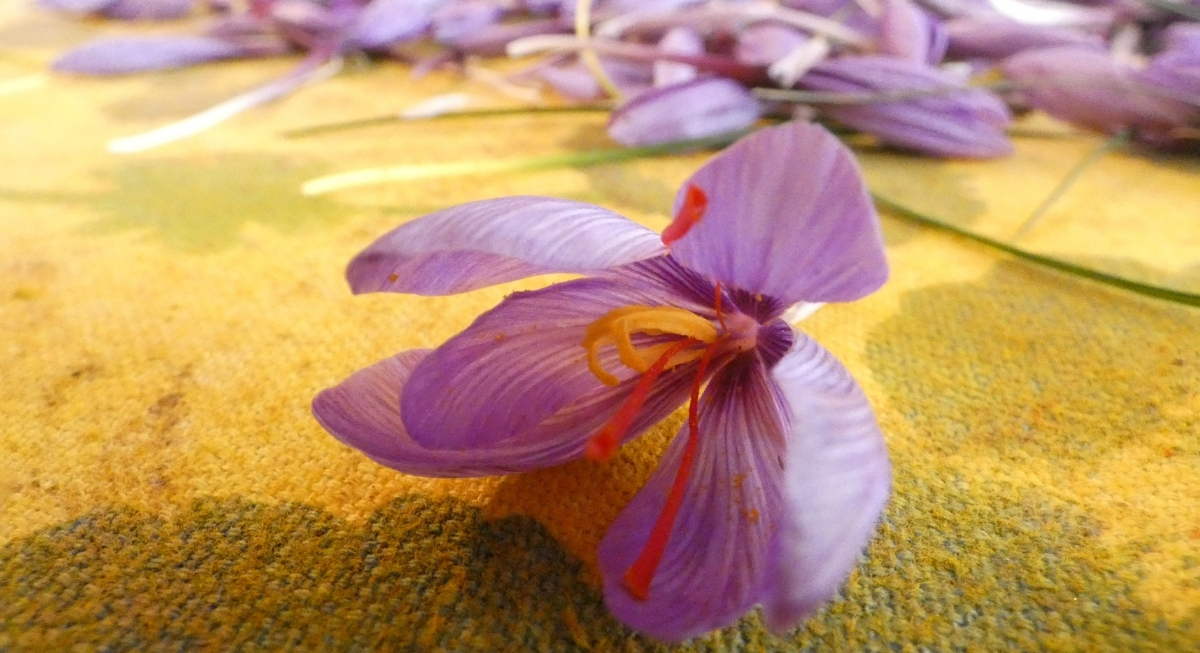
Image via Pixabay/LouisJos
Saffron production depends on timing as much as effort. The flowers bloom for only a few days, usually in late September or early October. During that brief window, farmers have to move quickly.
Harvesting happens early in the morning when the flowers open. Workers pick each flower by hand, then carefully remove the three stigmas without damaging them. Machines do not handle this task well, so the process remains manual.
Even after picking, the work continues. The stigmas must be dried to preserve their color and flavor. There is no shortcut in any part of this process.
A Crop With Deep Roots
Saffron has been valued for thousands of years. Records trace its use back to ancient Greece and Rome, where it served as a perfume. It also appears in Chinese medicinal texts from the 16th century, and earlier evidence links saffron cultivation to around 1700 BC during the Minoan civilization.
Today, it remains a key ingredient in dishes like Spanish paella, French bouillabaisse, and Moroccan tagines. It is also used as a dye and in perfumes.
Iran produces about 90 percent of the world’s saffron, with smaller amounts grown in countries like Spain, India, Greece, and Italy. Even with multiple growing regions, the overall supply remains tight because of the plant’s limitations.
A Little Goes A Long Way
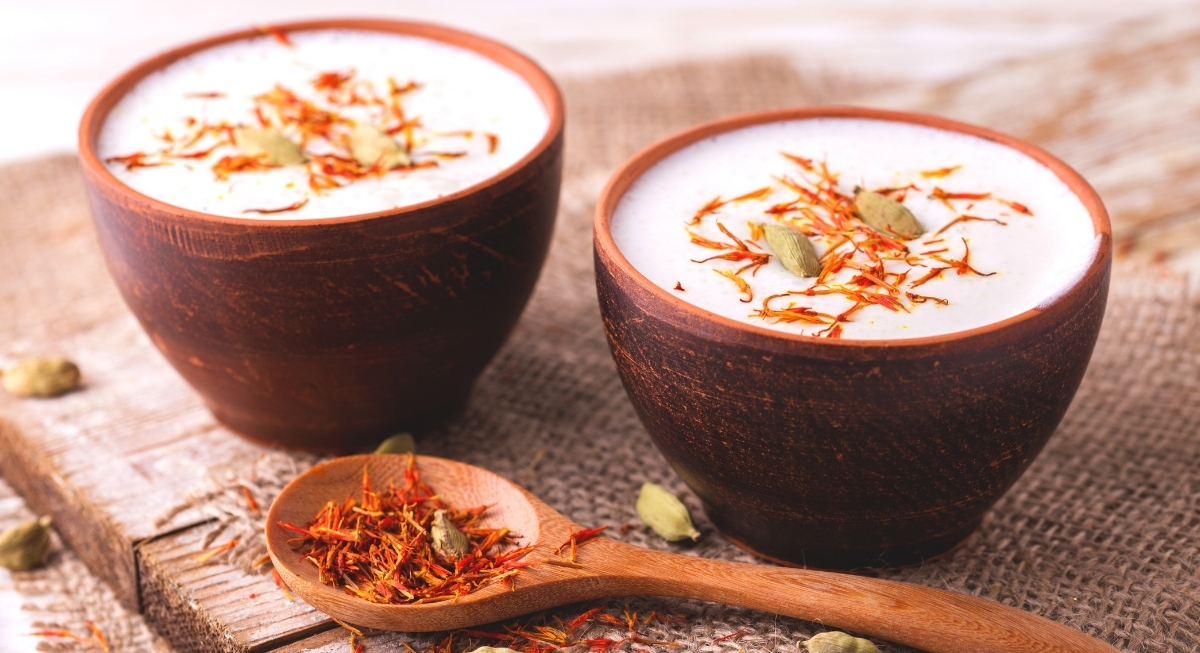
Image via Getty Images/Dzevoniia
Despite its cost, saffron is used in very small amounts. A typical dish needs only about 10 to 15 threads to create its signature color and flavor. The small quantity delivers a distinct taste often described as floral with a slight earthy sweetness and a hint of bitterness. It also turns food a vivid yellow, which is part of its appeal in rice dishes and desserts.
The Problem With Fake Saffron
High value often attracts imitation, and saffron is one of the most commonly adulterated spices in the world. Some sellers mix real saffron with materials such as safflower petals, marigold, turmeric, or even synthetic fibers to increase volume. In other cases, entirely fake products are sold as saffron at unusually low prices.
Authentic saffron has a deep red color, a trumpet-like shape, and a floral scent with hints of honey and hay. Price is also a reliable signal. If it seems unusually cheap, it likely is not genuine.