
Fast food chains in the 1990s released more experimental menu items than at any other point in modern history. Increased competition, aggressive marketing budgets, and a push to stand out led brands to test ideas quickly and widely. These items either succeeded long enough to become nostalgic favorites or failed despite heavy promotion, nationwide rollouts, or strong early testing. Several of those discontinued items still surface in online debates and limited-time revivals. This article provides a closer look at how they were designed and marketed.
Wendy’s Country Fried Steak Sandwich
Wendy’s introduced a country-fried steak sandwich that sold for 99 cents. Quality control proved difficult because this type of meat relies on precise preparation. Its tough texture and inconsistent breading left diners unimpressed. Reports at the time also raised questions about its nutritional profile compared to other low-cost menu items. It soon disappeared as the chain shifted attention elsewhere.
Arch Deluxe Overreach
McDonald’s invested a massive budget into a premium burger marketed toward adults. Focus groups responded well, but the campaign overlooked the reality that McDonald’s regulars already had menu favorites at lower prices. The advertising strategy leaned on the idea that kids disliked the sandwich, which confused customers more than it persuaded them. The product sank under its own ambition.
Little Caesars’ Spaghetti Bucket
View this post on Instagram
Little Caesars offered pasta in bucket form, including a version weighing around three and a half pounds. The product used frozen pasta that didn’t deliver the firm bite people expect. Social media users who remember the item often joke about the buckets being reused at home for reasons unrelated to dinner. Texture and presentation issues quickly ended the concept.
McLobster Misfire
McDonald’s rolled out a bargain lobster roll with a price tag that caused disbelief across the country. Reports place it in circulation during the early 1990s, with sporadic appearances in later years in select areas. Offering a premium seafood dish at fast food speed created quality issues, and placing it in regions known for exceptional lobster only highlighted the gap. It stayed in the market longer than expected, but its legacy lives on as a corporate gamble that never aligned with customer expectations.
Burger King’s Dinner Baskets
Burger King once attempted table service in the evenings. Guests could sit down and order shrimp, steak sandwiches, chicken, or a Whopper served in a basket. The idea lasted until 1994 and clashed with the entire purpose of fast food. Extending wait times made the experiment a mismatch for customer habits, so the concept passed into history.
Domino’s Oversized Dilemma
View this post on Instagram
Domino’s tried to compete in the size wars with a giant round pizza called the Dominator. The trouble began when drivers discovered the pie barely fit in cars. Unlike rectangular competitors that traveled well, this one created logistics challenges that undercut its purpose. Customers who ordered pickup faced the burden of transporting an awkward saucer that fought every door frame. Novelty alone couldn’t save it.
McStuffins That Lost Their Fight
McDonald’s tested stuffed sandwiches with fillings such as pepperoni, Philly cheesesteak, BBQ chicken, and teriyaki chicken. The idea struggled for traction. Hot Pockets already offered a similar experience at home, and leaving the house for a product that tasted familiar weakened interest.
Szechuan Sauce Confusion
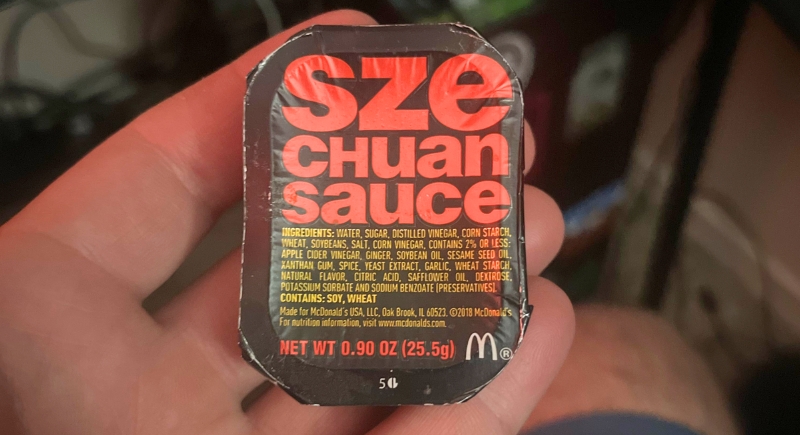
Image via Reddit/JokerOnRL
The original 1998 dip, tied to the release of the animated film “Mulan,” earned little attention until a later pop-culture surge pulled it back into the spotlight. Crowds rushed to locations when McDonald’s reissued limited quantities. After the frenzy passed, reviews noted that the sauce tasted ordinary. The hype overshadowed the product, and the sauce returned to obscurity once the novelty wore off.
McLean Deluxe Misstep
McDonald’s attempted a reduced-fat burger made with lean meat supported by carrageenan, a seaweed extract. The patty became known for its dry texture and inconsistent cooking behavior. The added salt undercut the health claims, and customers reported low satisfaction with the flavor. After several years, it left the menu.
Arby’s Double Decker Stack
Arby’s once sold sandwiches piled so high that finishing them required strategy. Options included a deluxe, a roast beef and Swiss, and a bacon cheddar stack. The size made them difficult to manage, and practicality matters when eating on the go. They vanished before gaining any real fanbase.